




 230
230
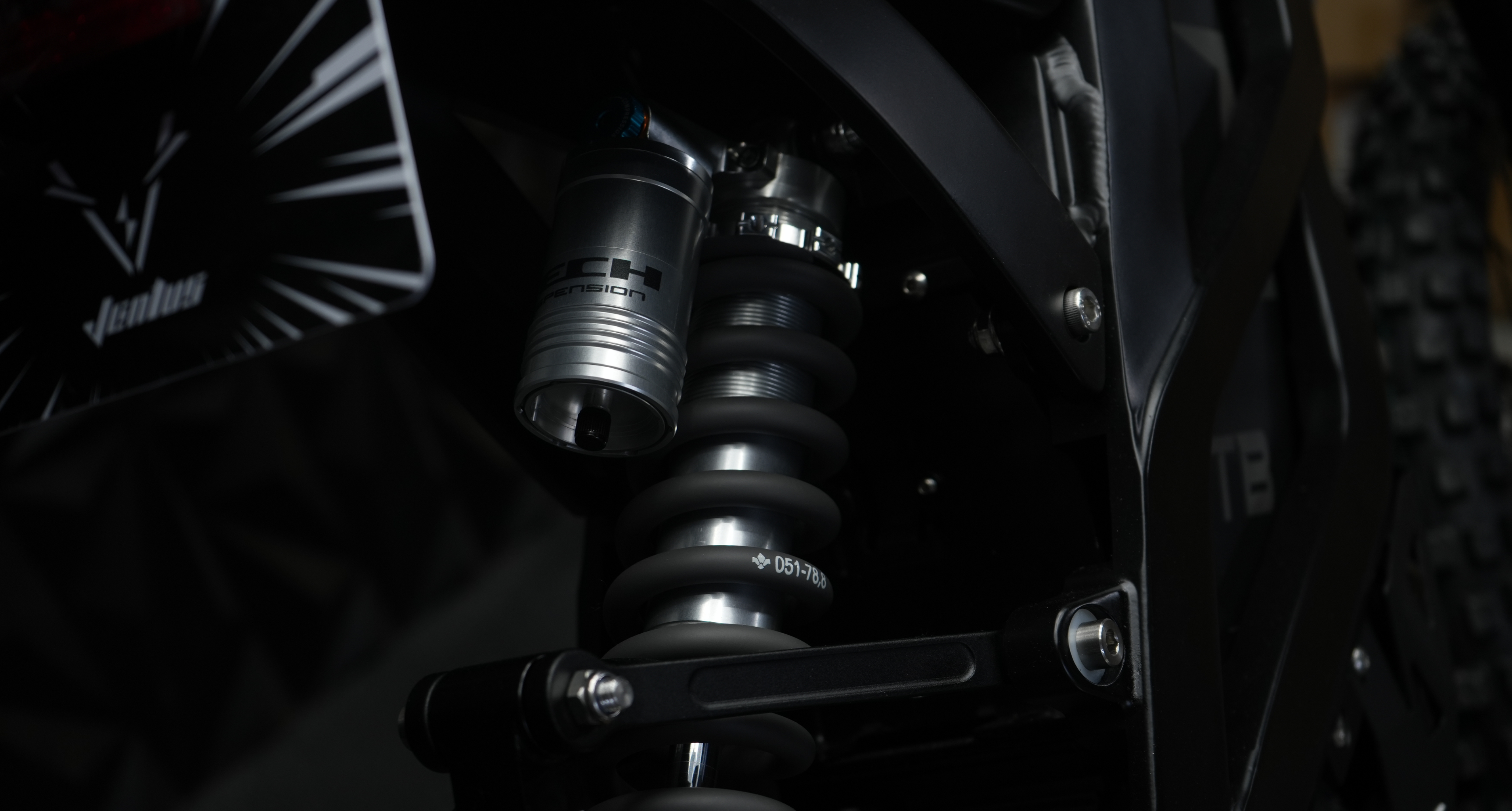
Tech LBX Rear Shock Tuning – Rebound & Compression Explained
1. Overview
This article explains how to properly tune the Tech LBX Rear Shock, focusing specifically on rebound and compression adjustments. By the end of this guide, riders will understand what each clicker does, how it affects performance on the trail, and how to tune the shock for different riding styles, terrains, and rider weights.
2. Key Details or Product Summary
Product Name: Tech LBX Rear Shock
Category: Rear Suspension Component (Light eMoto)
Purpose:
To help riders understand how to properly adjust rebound and compression damping on the Tech LBX shock to improve traction, comfort, stability, and overall bike handling.
Brand/MFG: TECH Suspensions (LBX Platform)
What This Guide Covers:
-
How rebound and compression damping work
-
How each adjustment affects performance
-
Tuning recommendations for different terrains
-
Common symptoms of incorrect shock settings
Who This Article Is For:
-
SurRon LBX riders
-
Talaria riders using LBX-style shocks
-
E-Moto riders upgrading from stock suspension
-
Riders who want better control, comfort, and performance
3. In-Depth Explanation or Comparison
This section provides a detailed breakdown of how the Tech LBX rear shock works, focusing on the purpose and function of the rebound and compression adjustments. These principles apply to SurRon LBX-style bikes, Talaria platforms using LBX shocks, and any light e-moto that runs the Tech rear shock.
3.1 Core Concept / Product Description
The Tech LBX Rear Shock is a high-performance adjustable shock designed for light electric motorcycles. It allows riders to fine-tune the rear suspension by adjusting compression damping, rebound damping, and spring preload, giving precise control over how the bike handles impacts, acceleration, cornering, and technical terrain.
Rebound and compression are the two primary clicker functions that shape how the shock behaves:
-
Compression controls how the shock absorbs impacts when it is being compressed.
-
Rebound controls how quickly the shock returns to its original position after compression.
Together, these adjustments allow riders to customize traction, stability, comfort, and overall handling for different riding styles and environments.
3.2 Feature Breakdown – Compression Damping
Compression damping affects how the shock responds when the rear wheel hits bumps, landings, rocks, or uneven ground. Turning the compression adjuster changes how much the shock resists being compressed.
What Compression Damping Does
-
Reduces bottoming on big hits
-
Controls G-outs and hard compressions
-
Provides support during acceleration
-
Influences how “plush” the rear end feels
How to Adjust
-
Turn IN (clockwise): Increases compression → firmer, more resistance
-
Turn OUT (counterclockwise): Decreases compression → softer, more compliant
Use Case Examples
-
More compression: MX tracks, jumps, aggressive riders, heavier riders
-
Less compression: Trails, rocky singletrack, off-camber roots, lighter riders
3.3 Feature Breakdown – Rebound Damping
Rebound damping controls how quickly the shock extends after being compressed. This is critical for traction, stability, and how the bike feels in corners or whoops.
What Rebound Damping Does
-
Prevents the shock from “springing back” too fast
-
Controls traction during corner exits
-
Stops rear-end swapping in rough terrain
-
Prevents packing in repeated whoops or choppy bumps
How to Adjust
-
Turn IN (clockwise): Slower rebound → more stability, more traction
-
Turn OUT (counterclockwise): Faster rebound → quicker reset, livelier feel
Use Case Examples
-
Slower rebound: Sand, whoops, fast straight sections, heavier riders
-
Faster rebound: Tight turns, technical rock sections, light riders
3.4 How Compression & Rebound Work Together
Both clickers must be balanced. Incorrect tuning in one can affect the other:
-
Too much compression + too little rebound → harsh and bouncy
-
Too little compression + too much rebound → wallowy and slow to reset
-
Proper balance → stable, predictable, and comfortable rear suspension
For optimal setup, riders should adjust compression and rebound together based on terrain, riding style, and spring preload.
4. Insights, Notes & Recommendations
🌐 Technical Insight
The Tech LBX Rear Shock uses a high-performance damping system designed specifically for lightweight electric motorcycles. Unlike most OEM shocks, it features independent rebound and compression circuits, allowing for true fine-tuning rather than a single combined damping adjustment.
Because electric bikes carry most of their weight low and central, proper rebound and compression tuning significantly affects:
-
Rear wheel traction
-
Cornering stability
-
Whoop and chop control
-
Jump landings
-
Mid-corner support
A well-tuned Tech LBX shock can completely transform how controlled and planted the bike feels—especially at higher speed, or on choppy terrain.
🧭 Recommended Use
The Tech LBX Rear Shock performs best in:
-
Singletrack & trail riding where traction and comfort are key
-
MX-style tracks, providing better bottom-out resistance and high-speed support
-
Technical enduro, improving control through rocks, roots, and ledges
-
Jump-heavy riding, thanks to adjustable compression damping
-
E-Moto racing, where consistent damping under heat is a major advantage
Riders upgrading from a stock SurRon or Talaria shock typically notice immediate improvements in:
-
Stability in corners
-
Predictability on landings
-
Rear-end tracking in fast terrain
-
Control through repeated bumps
💬 Customer Feedback Summary
Riders who switch to the Tech LBX Rear Shock consistently report:
-
Much better rear-end traction, especially under throttle
-
Reduced kicking or bucking on square-edge bumps
-
More predictable rebound in whoops and whoop-like terrain
-
A big improvement in comfort over stock, especially on longer rides
-
Better performance under heat, with damping staying consistent
The biggest differences are usually felt after taking time to dial in rebound and compression properly.
6. Related Articles
Link to relevant resources, comparisons, or setup guides.
-
How to Install a Tech LBX Rear Shock
Step-by-step installation guide including torque specs, mounting orientation, and initial preload setup. -
Benefits of Running Tech Front and Rear Suspension Together
An overview of how matched damping characteristics improve balance, traction, and overall stability across all riding conditions.

